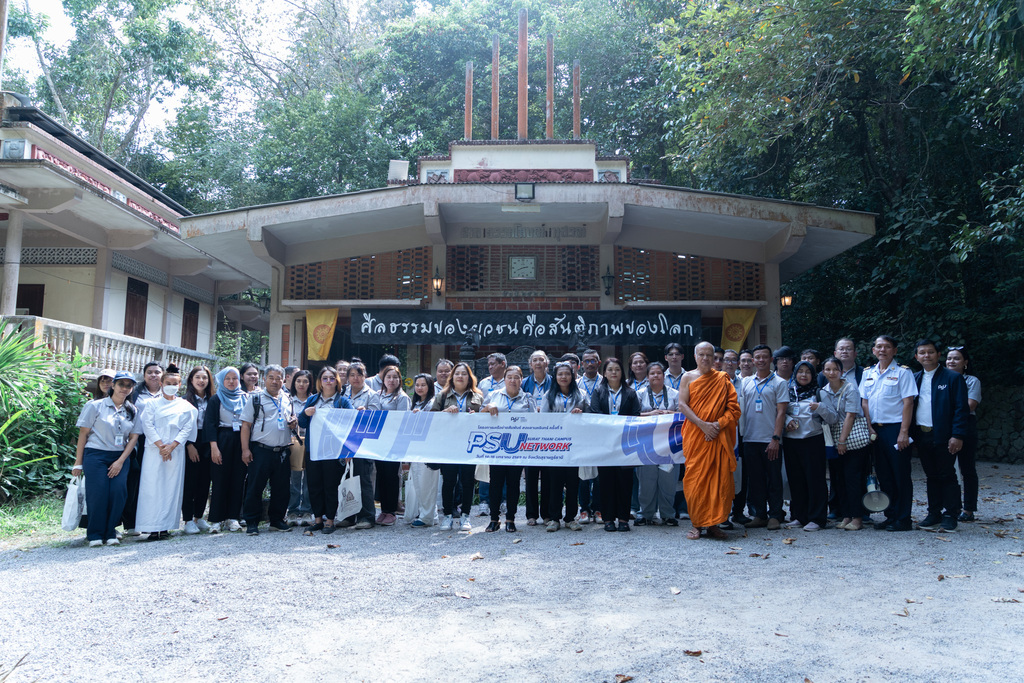
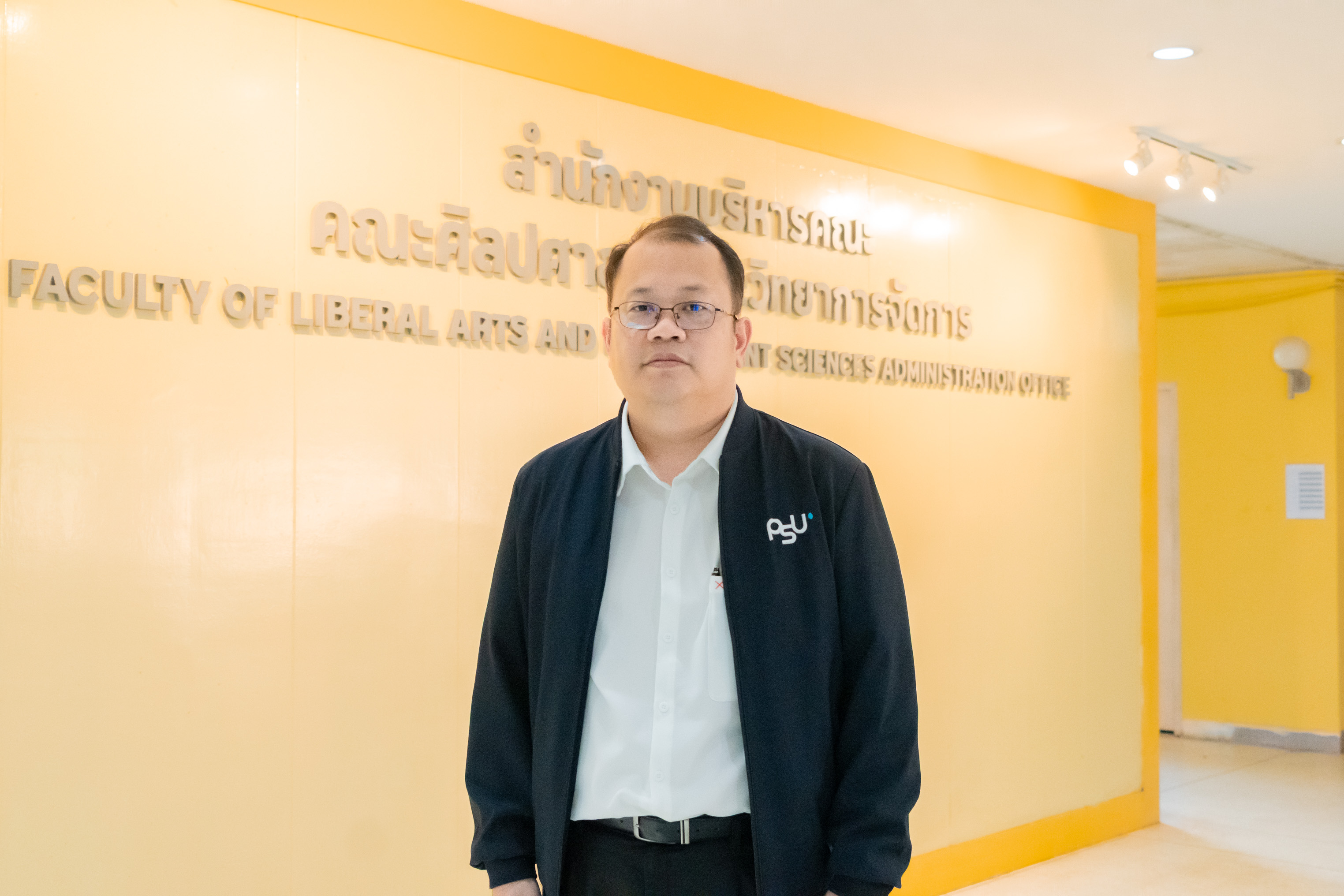
Assistant Professor Dr. Sakda Khajornboon, Dean, Faculty of Liberal Arts and Management Sciences, Prince of Songkla University (PSU), Surat Thani Campus, stated that the Srivijaya Studies Center was established around three years ago in response to the university’s mission to revitalize the “Thung Sai Chai” area and create shared value with surrounding communities through arts and culture — an important form of social capital in Chaiya District. The name “Srivijaya” was chosen as a central conceptual framework to reflect multiculturalism and to connect history, culture, and spiritual thought, without being confined to any single religion or individual.
At present, the Srivijaya Studies Center prioritizes building a systematic knowledge base. It began by developing a university course titled “Sawasdee Srivijaya” for PSU students. The course covers Srivijaya history, the teachings of Buddhadasa Bhikkhu, and ways to extend cultural capital into the creative economy. In parallel, the Center is developing an online course package in Srivijaya liberal arts to be offered on the PSU MOOC platform, expanding access to knowledge for youth and the general public.
Looking ahead, the Center plans to launch the “Srivijaya School Bus” initiative, bringing university knowledge into local schools to cultivate youth awareness of local history and culture seen as a critical foundation for future conservation efforts and the development of cultural tourism.
The dean added that Surat Thani province is advancing three key areas Chaiya District, Khao Srivijaya, and Wiang Sa District to support efforts toward World Heritage inscription. The Srivijaya Studies Center has been assigned a leading academic role, responsible for systematizing knowledge, research, and historical data to meet standards aligned with UNESCO evaluation criteria —particularly community participation, which is a key requirement for World Heritage status.
“New forms of cultural tourism are not merely about visiting ancient sites; they are about storytelling that communicates the value of a place by linking history, people, and ways of life,” Dr. Sakda said. “What matters is systematically collecting this knowledge before local wisdom disappears along with the people who hold it.” He cited the case of Phum Riang handwoven textiles, where only the last remaining weaver is left today highlighting the urgency of documenting and passing on this knowledge.
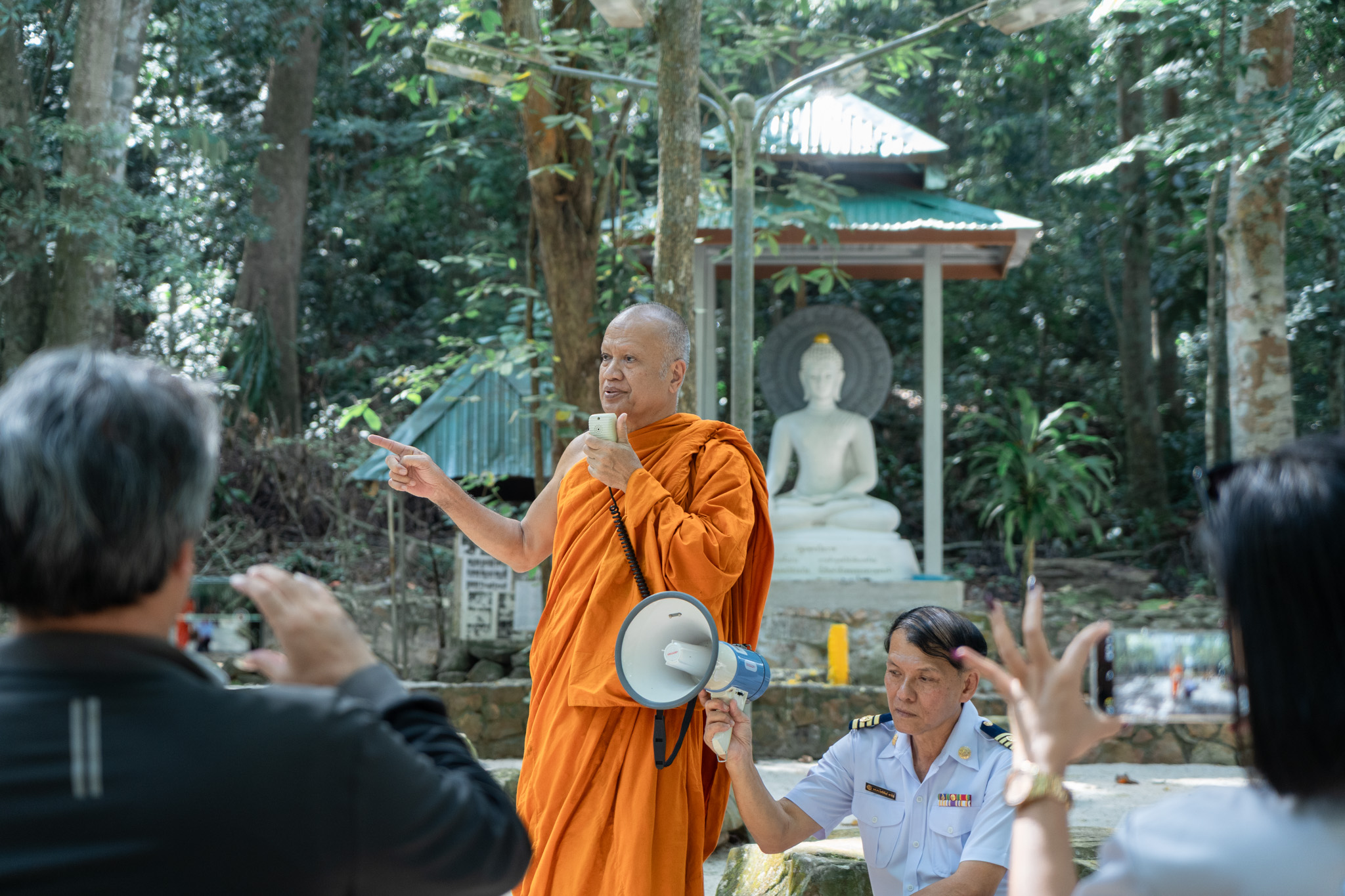
In terms of external collaboration, the center continues to work closely with communities, tourism-related agencies, and local partner networks. The focus is on developing new platforms and communication formats that match the behavior of new-generation travelers, integrating academic instruction with student fieldwork to produce content and public relations media that reflect the Srivijaya city identity in a contemporary way.
The center also connects its work with Suan Mokkhaphalaram as a learning hub for spirituality and Dharma. Students and staff are sent to study, interpret, and communicate the deeper substance of Buddhadasa Bhikkhu’s teachings to enrich value-based tourism and promote sustainable living.
For its long-term vision, the Srivijaya Studies Center aims to serve as an “academic pillar” of the province — monitoring, documenting, and continuously developing knowledge on arts and culture, while applying new technologies and innovations to cultural tourism. The goal is to preserve Surat Thani’s cultural capital, generate economic value, and support balanced and sustainable community growth.
The Srivijaya Studies Center believes that the combined strength of Prince of Songkla University’s five campuses, together with multi-sector collaboration, will be a key force in advancing Surat Thani toward becoming a Srivijaya city and, ultimately, a World Heritage city in tangible terms.